blog
.avif)
Will Power Washing Damage Paint on Your Home's Exterior?
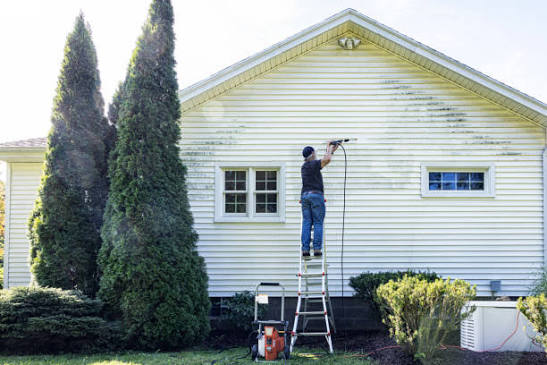
One of the most common concerns homeowners raise when considering exterior power washing is whether the pressure will damage or strip the paint on their home's siding, trim, and other painted surfaces. It's a legitimate question, and like most things in exterior cleaning, the honest answer is that it depends entirely on the pressure used, the technique applied, and the specific condition of the paint being cleaned. Here's what you actually need to know to make an informed decision.
When Power Washing Is Safe for Painted Surfaces
Well-Adhered Paint on Sound Surfaces Handles Appropriate Pressure Fine
Paint that is properly adhered to a sound, prepared substrate, meaning it was applied correctly, hasn't reached the end of its service life, and isn't already peeling, bubbling, or failing at the adhesion level, handles appropriate power washing pressure without damage. The key word here is appropriate: pressure calibrated specifically for painted surfaces rather than the higher settings used for bare concrete or brick.
Professional Pressure Calibration for Paint
Professional power washing services adjust pressure specifically for painted surfaces, using settings that effectively remove surface contamination including mold, algae, dirt, and chalk without the force necessary to mechanically remove well-adhered paint. This calibrated approach is the core difference between professional cleaning that safely treats painted surfaces and aggressive pressure washing that genuinely risks paint damage.
When Power Washing Can Damage Paint
Already Failing Paint Gets Removed by Pressure
This is the most important nuance in the painted surface cleaning question: power washing doesn't damage well-adhered paint, but it will remove paint that is already failing. Peeling, bubbling, chalking, or otherwise poorly adhered paint that would come off with relatively gentle mechanical force will be removed by pressure washing. Whether this is damage or simply an accelerated reveal of existing failure depends on how you look at it, but the outcome is the same: areas where paint was already failing will show bare substrate after cleaning.
High Pressure on Aged or Thin Paint
Very old paint or thin, single-coat applications that have become brittle with age may not tolerate even moderate pressure as well as newer, properly built-up paint systems. Paint that has been in place for many decades without repainting, particularly on wood surfaces where the paint bond may have been compromised by moisture cycling over the years, warrants more conservative pressure than relatively recent paint in good condition.
Forcing Water Behind Siding Through Improper Angle
Directing pressure at an upward angle into lapped siding joints forces water behind the siding where it can't dry properly, creating the moisture conditions that cause paint to blister and peel from behind regardless of the paint's surface condition. This technique error causes paint damage through moisture intrusion rather than mechanical pressure, and it's a common consequence of inexperienced pressure washing technique on horizontal-lap wood or fiber cement siding.
What Professional Assessment Looks For Before Cleaning Painted Surfaces
Pre-Cleaning Paint Condition Inspection
A professional approach to power washing painted surfaces includes a pre-cleaning assessment of the paint's current condition, identifying areas of existing failure, checking for peeling, bubbling, or chalking, and noting any previous repairs or patches that may behave differently from the surrounding surface under cleaning pressure.
Adjusting Expectations Based on Paint Condition
When pre-cleaning assessment reveals areas of paint failure, a professional service communicates this finding before cleaning proceeds so that homeowners understand that those specific areas will show exposed substrate after cleaning rather than discovering the outcome as a surprise. This transparency is part of what separates professional service from pressure washing that proceeds without assessment.
Power Washing Before Repainting: The Ideal Combination
The scenario where power washing and paint interact most productively is in preparation for exterior repainting, which is covered in detail in the following blog. A pressure washing that removes chalk, mold, and loose failing paint from a surface scheduled for repainting is performing a productive preparation function rather than representing potential damage, since the new paint system will cover the cleaned substrate with fresh protection.

The Bottom Line on Paint and Pressure Washing
Well-adhered paint on sound surfaces handles professional-calibrated pressure washing without damage, and this describes the vast majority of painted exterior surfaces on homes that have been reasonably maintained. Paint that is already failing will be revealed by cleaning regardless of pressure, and understanding this distinction helps set appropriate expectations for power washing results on painted surfaces.
Request your power washing quote here.
Detail You Can See. Quality You Can Trust.
Contact Us


Find us on


