blog
.avif)
Why Bugs Swarm Around Porch Lights and What to Do About It
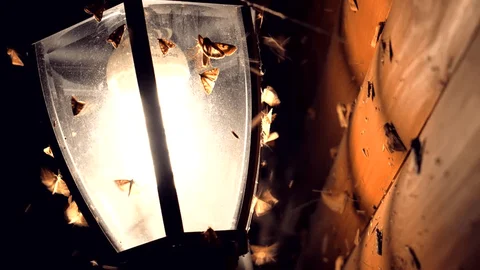
If you've ever stood at your front door on a summer evening and noticed a swirling cloud of insects around your porch light, or found heavy spider web activity concentrated specifically around exterior lighting fixtures, you've observed one of the most direct connections in home pest management: exterior lighting drives insect concentration, and insect concentration drives spider activity. Understanding this relationship helps explain why certain areas of your home's exterior accumulate web buildup far faster than others, and what practical steps can reduce the problem at its source.
Why Insects Are Attracted to Artificial Light
The Phototaxis Response
Many insect species exhibit phototaxis, a behavioral tendency to move toward light sources. This instinct developed over evolutionary history in response to natural light sources like the moon and stars, which insects used for navigation. Artificial lighting, particularly the shorter-wavelength blue and ultraviolet light emitted by many common bulb types, triggers this same navigational instinct, drawing insects toward the artificial source as if it were the natural light they evolved to navigate by.
Short-Wavelength Light Attracts More Insects
Not all light is equally attractive to insects. Shorter wavelengths, including ultraviolet, blue, and white light, attract significantly more insect species than longer wavelengths in the yellow, orange, and red spectrum. Standard incandescent bulbs and many LED white bulbs emit substantial amounts of the shorter wavelengths that insects respond to most strongly, while yellow-toned bulbs emit predominantly longer wavelengths that are less attractive to the insect species most commonly drawn to exterior lighting.
Heat as a Secondary Attractant
Traditional incandescent bulbs emit significant heat in addition to light, and the warmth radiating from these fixtures provides an additional attractant for certain insect species, particularly during cool evenings when warm surfaces are more actively sought. LED bulbs that emit significantly less heat eliminate this secondary attractant, which is one of the additional reasons LED lighting tends to attract fewer insects than equivalent incandescent fixtures.
The Direct Connection Between Lighting and Spider Web Concentration
Spiders Follow Their Food Supply
Web-building spiders are opportunistic in their web placement, and they've learned that exterior lighting concentrates their prey in predictable locations. A porch light surrounded by dozens of moths and gnats on a summer evening is, from a spider's perspective, a reliable food delivery system, and building a web immediately adjacent to this food source is sound spider strategy that explains the heavy web accumulation around lighting fixtures that homeowners consistently notice.
Web Replacement Happens Rapidly Near Active Lights
Because food availability near exterior lighting is high, spiders that build near these locations eat well and build rapidly. Webs near active lights are among the fastest to reaccumulate after removal, since the food supply that attracted web-building to this location persists regardless of whether a web was recently removed.
Practical Steps to Reduce Insect Concentration Around Exterior Lighting
Switch to Yellow or Warm LED Bulbs
Replacing standard white exterior bulbs with yellow LED or warm-spectrum LED bulbs is the single most effective lighting-based step for reducing insect concentration near your home's exterior. The longer wavelengths emitted by warm or yellow bulbs are significantly less attractive to the insect species most commonly drawn to exterior lighting, reducing the insect concentration that drives spider activity to these locations.
Motion-Activated Lighting Reduces Total Exposure Time
Replacing continuously-on exterior lighting with motion-activated fixtures reduces the total hours of insect-attracting light emission per night without eliminating the security and visibility function that exterior lighting serves. Fewer hours of operation means less total insect accumulation around each fixture, which translates into slower web accumulation in the surrounding area.
Positioning Lights Away From Entry Points
Where lighting configuration allows, positioning exterior light fixtures away from door frames and entry points, such as on a post away from the door rather than mounted immediately adjacent to the entry, keeps the insect concentration that lights generate slightly further from the high-traffic entry area where web buildup most directly affects the arrival experience.
Why Professional Spider Web Removal Addresses the Symptom
While the lighting modifications above address the root cause of concentrated web activity around exterior fixtures, regular professional removal addresses the accumulated symptom effectively in the meantime and for areas where lighting modification isn't practical or desired. Comprehensive removal that specifically addresses the fixtures, adjacent surfaces, and the eave areas above lighting fixtures where accumulated webs are most prominent provides the clean exterior appearance that lighting-driven activity would otherwise continuously compromise.

Managing Both Cause and Symptom
The most effective approach to exterior spider web management combines addressing the underlying attractant through lighting choices that reduce insect concentration with regular professional removal that maintains clean exterior surfaces despite the ongoing activity that some degree of exterior lighting will always generate. Together, these approaches deliver the cleanest possible exterior with the least frequent need for intensive removal service.
Request your spider web removal quote here.

Detail You Can See. Quality You Can Trust.
Contact Us


Find us on


