blog
.avif)
What Happens to Your Driveway If You Never Power Wash It
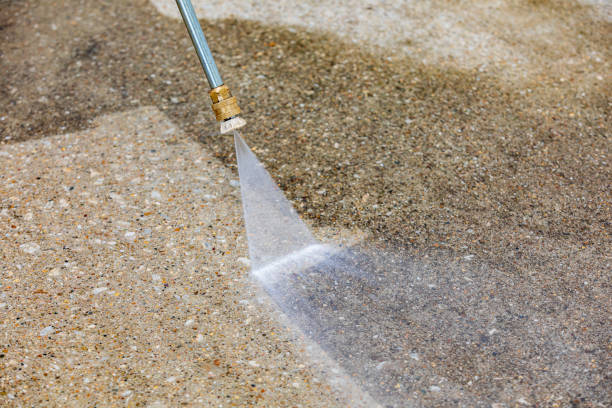
Most Fort Worth homeowners understand that power washing improves how a driveway looks. Fewer think about what actually happens to the concrete itself when cleaning is skipped indefinitely, not just cosmetically but structurally, and what the long-term cost of that neglect looks like compared to the relatively modest cost of regular professional maintenance. If you've been putting off driveway power washing on the assumption that it's purely cosmetic and therefore optional, here's what the research and real-world experience of concrete maintenance actually shows.
Year One Without Power Washing: The Accumulation Begins
Surface Contamination Establishes Itself
In the first year without cleaning, your driveway accumulates the standard mix of atmospheric grime, tire compound deposits, vehicle fluid drips, and the early stages of biological growth in any shaded or consistently damp areas. At this stage, the accumulation is primarily surface level, meaning it sits in and just below the top layer of the concrete's pore structure rather than having penetrated deeply into the material.
This is the stage at which professional cleaning is most effective, most affordable, and most completely restorative. Surface-level contamination that hasn't had time to penetrate deeply, bond firmly, or contribute to biological growth that roots into the concrete responds well to standard power washing without the need for intensive pre-treatment or multiple service passes.
Biological Growth Gets Its Foothold
The first year is also when algae and mold find the conditions they need to establish themselves in the shaded areas, low-lying spots, and edges of your driveway where moisture collects and sun exposure is limited. At this early stage, biological growth is relatively superficial and hasn't developed the established root system that makes it more persistent and harder to fully remove in later years.
Years Two and Three: Contamination Deepens and Spreads
Oil and Fluid Stains Penetrate Further
Vehicle fluids that dripped onto the driveway surface in year one and weren't addressed have now had one to two additional years to migrate deeper into the concrete's pore structure through repeated cycles of Texas heat. The same oil stain that was a relatively straightforward surface-level cleaning challenge in year one has become a more deeply embedded stain in years two and three that requires more intensive degreasing pre-treatment and potentially multiple cleaning passes to address fully.
Fresh oil stains on unsealed concrete penetrate roughly a quarter inch in the first few days. Over one to three years of heat cycling in Texas summers, that same stain can migrate significantly deeper into the concrete, making complete removal progressively more difficult with each passing season.
Biological Growth Roots Into the Surface
Algae and mold that established themselves in year one have now had two to three full growing seasons to develop established root systems that penetrate into the concrete's pore structure rather than sitting at the surface. This rooted biological growth is more resistant to removal than the surface-level growth of year one, often requiring specific pre-treatment with solutions designed to address below-surface growth rather than just the visible layer.
More importantly, established biological growth that's actively rooting into concrete contributes to a specific type of concrete deterioration called biological weathering, where the organisms themselves participate in the breakdown of the concrete's surface layer through both mechanical root penetration and the acidic compounds some species produce.
The Color Change Becomes Permanent-Looking
By years two and three, the driveway's color has shifted noticeably from its original appearance. The combination of deeply embedded grime, established biological staining, and the general darkening that multiple seasons of contamination produce creates a color change that looks increasingly permanent to casual observation. Homeowners who've let their driveway go this long often begin referring to their driveway's current color as its natural color, having forgotten what the original concrete looked like.
Professional cleaning at this stage still produces a dramatic improvement, but the results may not be quite as complete as first-year cleaning would have achieved, since some staining has penetrated deeply enough to be only partially addressed rather than fully removed.
Years Four and Five: Structural Implications Begin
Surface Scaling and Spalling Start to Develop
This is where concrete neglect begins to have implications beyond appearance. Scaling and spalling, where the concrete surface begins to flake, chip, or pit, result from a combination of freeze-thaw cycles, biological weathering, and the moisture retention that accumulated grime and biological growth maintain against the concrete surface.
Texas doesn't experience the severe freeze-thaw cycling of northern climates, but it does experience occasional freezing temperatures, and concrete that's consistently damp from retained moisture and biological growth is more vulnerable to even the modest freeze-thaw cycling that North Texas winters provide than clean, dry concrete would be.
Crack Development Is Accelerated by Moisture Retention
Concrete that's chronically damp from biological growth and accumulated grime retains moisture in its pore structure that clean, well-maintained concrete allows to dry out between weather events. This chronic moisture retention contributes to crack development and crack propagation over time, since water in concrete cracks expands slightly during freezing and contracts during warming in cycles that gradually widen existing cracks and initiate new ones in stressed areas.
Staining Reaches Depths That Professional Cleaning Cannot Fully Address
After four to five years of accumulated contamination without cleaning, certain types of staining have penetrated so deeply into the concrete that professional cleaning, while still dramatically improving appearance, cannot fully restore the original concrete color. Oil stains that have been heat-cycled through multiple Texas summers, biological staining that has had years to develop in the surface layer, and mineral deposits that have accumulated through dozens of rain events all contribute to a depth of contamination that partial rather than complete restoration addresses at this stage.
What Long-Term Neglect Actually Costs
Repair Costs vs. Maintenance Costs
The financial comparison between regular professional cleaning and the eventual cost of neglect is straightforward once you understand what neglect actually produces. Regular power washing prevents the biological weathering, moisture retention, and contamination penetration that contribute to surface deterioration. Concrete repair, whether resurfacing, crack filling, or in severe cases partial replacement, costs significantly more than the cumulative cost of the regular cleaning that would have prevented the deterioration requiring repair.
Curb Appeal and Property Value Implications
A driveway that's been neglected for multiple years tells a story to every person who visits your property, and to every potential buyer if you ever sell. The story it tells is one of deferred maintenance that prompts questions about what else on the property has been similarly neglected. Real estate professionals consistently cite driveway condition as one of the first things buyers notice and one of the most immediate curb appeal factors that shapes their initial impression of a property.
The Escalating Cost of Catch-Up Cleaning
One practical financial implication of extended driveway neglect that many homeowners don't anticipate is that catch-up cleaning after multiple years of neglect costs more than regular maintenance cleaning would have. Heavily contaminated driveways require more intensive pre-treatment, longer service time, potentially multiple cleaning passes, and sometimes specialty treatments for specific stain types that regular maintenance cleaning at appropriate intervals never requires.
The total cost of neglecting professional cleaning for five years and then scheduling a single intensive catch-up cleaning often exceeds the total cost of five years of regular annual maintenance cleaning, while delivering less complete results than regular cleaning would have achieved.

The Simple Case for Regular Driveway Maintenance
Your driveway is a significant concrete installation that represents a real investment in your property. Like any concrete structure, it benefits from regular maintenance that prevents the biological growth, contamination penetration, and moisture retention that contribute to accelerated deterioration. Regular professional power washing isn't just cosmetic maintenance. It's protective maintenance that extends your driveway's functional lifespan and preserves its appearance in ways that benefit both your daily enjoyment of your property and its long-term value.

Detail You Can See. Quality You Can Trust.
Contact Us


Find us on


