blog
.avif)
What Different Spider Webs on Your Home Exterior Actually Look Like
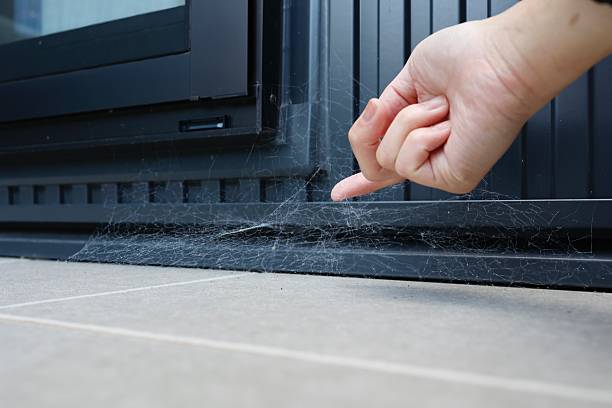
Not all the web structures you find around your home's exterior are the same. Different spider species build structurally distinct web types that look completely different from each other, appear in different locations around the home, and signal different things about the spider activity present on your property. Being able to recognize the most common web types found on Fort Worth and Saginaw area homes helps you understand what you're dealing with and communicate more specifically when scheduling professional removal.
The Classic Circular Orb Web
What It Looks Like
The orb web is the classic spider web that most people picture when they think of a spider web: a roughly circular or oval pattern of spiral threads supported by straight radiating threads that extend from a central hub outward to anchor points. These webs are architectural, geometric, and visually distinctive, typically ranging from a few inches to over a foot in diameter depending on the species and the available space.
Where You Find Them
Orb webs appear most commonly in open areas where flying insects are likely to pass through, particularly near exterior lighting fixtures where insects concentrate, between structural elements that provide anchor points at appropriate spacing, and in garden and landscape areas near the home's exterior where plant stems provide natural anchor opportunities.
What Species Build Them
Orb webs in the Fort Worth area are built by various orb weaver spider species, which are among the most visually impressive spiders you'll encounter around a Texas home given both their web architecture and their own often striking appearance. These are generally harmless species that pose no medical concern despite their sometimes alarming size and visual presence.
The Tangled Cobweb
What It Looks Like
Cobwebs are the irregular, three-dimensional, tangled-looking web structures that most people associate with neglected corners and sheltered spaces. Unlike the geometric precision of orb webs, cobwebs have no regular pattern: they consist of irregular threads extending in multiple directions, creating a tangled mass that accumulates dust and debris over time to become increasingly dark and visible.
Where You Find Them
Cobwebs concentrate in exactly the sheltered, low-disturbance areas that make eaves, soffits, covered porch ceilings, and the corners where walls meet rooflines so attractive to their builders. The indoor cobweb in the corner of a room is built by the same type of spider family that builds the increasingly heavy cobweb accumulations that develop in undisturbed eave areas over months and years without professional removal.
Why They Accumulate So Heavily in Eave Areas
The sheltered, low-disturbance conditions of eave and soffit areas allow cobwebs to grow and accumulate without the disruption that knocks down webs in more exposed locations. Over time, multiple overlapping cobweb structures in the same eave area build into the dense, debris-laden accumulation that represents the most visually impactful web buildup on most residential properties.
The Funnel Web
What It Looks Like
Funnel webs are flat sheet webs with a distinctive funnel-shaped retreat at one end where the spider waits for prey to land on the flat sheet portion. The flat sheet itself has a horizontal, almost platform-like appearance, and the funnel retreat tube extends into a crevice or corner from the edge of the sheet.
Where You Find Them
Funnel webs appear most commonly in low vegetation near the home's foundation, in grass and ground cover adjacent to the home's exterior walls, and in crevices within stacked materials, foundation gaps, and similar ground-level structures. They're generally found lower on the home's exterior and in adjacent landscaping rather than in the elevated eave and corner locations where cobwebs concentrate.
The Sheet Web
What It Looks Like
Sheet webs are horizontal flat webs that resemble small hammocks or platforms suspended between anchor points. Unlike the funnel web's retreat structure, sheet webs are relatively simple horizontal platforms, sometimes with irregular support threads above and below the main sheet, that function as landing surfaces where the spider waits for prey to fall onto or fly into the web.
Where You Find Them
Sheet webs appear in vegetation, between fence rails, in low ground-level structures, and in any location where horizontal anchor points at close spacing allow the sheet structure to be supported. They're less commonly found high on home exteriors and more associated with lower vegetation and ground-level structures adjacent to the home.
The Irregular Retreat Web
What It Looks Like
Some spider species build less elaborate retreat structures rather than display webs, creating messy, irregular silk structures in crevices, behind fixtures, and in dark corners that function primarily as a retreat and egg case shelter rather than an active prey capture structure. These appear as irregular silk masses or tubes rather than any organized web pattern.
Where You Find Them and Why They Matter
These retreat structures are often found in the most sheltered and darkest corners of exterior structures, behind light fixtures, in electrical conduit gaps, and in the crevices where fixtures meet exterior walls. Their presence signals active spider occupation of these specific spots, and thorough removal service specifically addresses these retreat structures and associated egg sacs rather than only removing the more obvious display webs in open areas.
Why Recognizing Web Types Helps
Understanding that different web types signal different species, different locations, and different types of activity helps you communicate more specifically about what you're seeing when scheduling professional removal, and helps you recognize that comprehensive professional service addresses all of these web types across all their typical locations rather than only the most visually obvious circular orb webs that attract the most attention.

Comprehensive Removal Regardless of Web Type
At Phillips Exterior Cleaning, full removal of webs, nests, and insect buildup from eaves, corners, and all exterior surfaces means exactly that: every web type in every location, not just the most prominent ones. A thorough service that addresses the cobweb accumulations in eave areas, the retreat structures behind fixtures, and the active display webs in open areas delivers a comprehensively clean exterior rather than a selectively cleaned one.

Detail You Can See. Quality You Can Trust.
Contact Us


Find us on


