blog
.avif)
Understanding the ROI of Keeping Your Solar Panels Clean
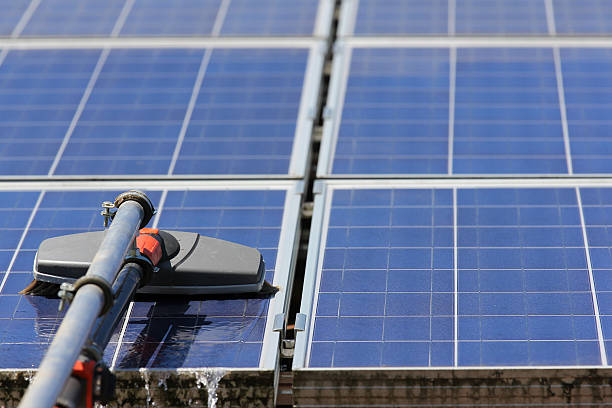
Solar panel ownership is fundamentally a long-term financial investment, and decisions about how to maintain that investment deserve the same return-on-investment thinking that went into the original purchase decision. For many Texas homeowners, the question isn't really whether solar panels need cleaning, the performance evidence for that is clear, but whether the cost of regular professional cleaning is justified by the efficiency gains it delivers. Here's a practical framework for thinking through that calculation.
The Core ROI Equation for Solar Panel Cleaning
The return on investment for solar panel cleaning is driven by a straightforward relationship: if dirty panels are producing less electricity than clean panels would, the value of that lost production is the opportunity cost of skipping cleaning. If the cost of professional cleaning is less than the value of the lost production it recovers, cleaning delivers a positive return.
What Reduced Efficiency Actually Costs
The efficiency reduction from dirty panels varies based on the severity of the buildup, but panels that haven't been cleaned through a full Texas pollen season and summer dust period can experience measurable output reduction compared to their clean-panel performance. For a system sized to meaningfully offset your monthly electricity costs, even a modest efficiency reduction represents a real dollar amount of electricity you're either purchasing from the grid or simply going without.
Calculating Your System's Sensitivity to Efficiency Loss
Larger systems with more panels produce more electricity and therefore have more total output at stake from efficiency losses, meaning the absolute dollar value of efficiency recovery from cleaning scales with system size. A homeowner with a large system has proportionally more to gain from maintaining peak efficiency than a homeowner with a smaller installation, though both benefit from the same principle.
Texas-Specific Factors That Amplify the ROI Case
High Electricity Rates Increase the Value of Every Kilowatt
Texas electricity rates, particularly during peak summer demand periods, mean that every kilowatt of electricity your solar system produces has meaningful value as avoided grid electricity cost. Higher electricity rates directly increase the dollar value of efficiency recovery from cleaning, improving the ROI calculation compared to regions with lower electricity costs.
Intense Pollen Season Creates Above-Average Efficiency Losses
Texas's significant pollen season creates one of the more impactful single-event buildup scenarios for solar panels compared to many other parts of the country. A full spring pollen season's worth of film on Texas panels likely represents a larger efficiency hit than comparable buildup in regions with less intense pollen output, amplifying the recovery value of a post-pollen-season cleaning.
Long, Hot Summers Mean Long Peak Production Periods
Texas's extended summer with high solar intensity means your panels are producing at or near peak capacity for more months of the year than in many other regions. Efficiency losses during this extended high-production period cost more in absolute terms than the same percentage efficiency loss during a shorter or less sunny peak season elsewhere.
What the ROI Calculation Doesn't Capture
Panel Longevity and Warranty Maintenance
Clean panels that are regularly inspected during cleaning visits are more likely to have issues identified and addressed early, potentially extending the functional lifespan of individual panels and protecting manufacturer warranty compliance. This longevity benefit has real financial value that's separate from the direct efficiency recovery calculation.
Resale Value Support
As covered in the solar panel resale value blog, well-maintained panels with documented cleaning history support a stronger case for the system's value contribution to home resale, which has financial implications that extend beyond month-to-month electricity savings.
How to Track Your System's Response to Cleaning
Monitoring Before and After Cleaning
If your solar system includes production monitoring, comparing daily or weekly output figures from the period immediately before cleaning to the period immediately after provides direct, system-specific evidence of how much efficiency was recovered by the cleaning. This before-and-after comparison gives you personalized ROI data for your specific system rather than relying on general efficiency estimates.
Establishing Seasonal Production Baselines
Over time, tracking your system's production by season and correlating it with your cleaning schedule helps you understand your specific system's sensitivity to buildup and how quickly efficiency losses accumulate between cleanings, which informs decisions about optimal cleaning frequency for your particular installation and environment.
The Simple Version of the ROI Case
For most Texas homeowners with a meaningful solar installation, the ROI case for regular professional cleaning is straightforward: the electricity value recovered by keeping panels clean consistently exceeds the cost of professional cleaning when considered over the lifespan of the system. The exact numbers are specific to each homeowner's system size, local electricity rates, and environmental conditions, but the directional conclusion holds across a wide range of realistic scenarios.

Make Your Solar Investment Work as Hard as It Can
A solar system that's regularly cleaned is simply a better financial asset than the same system left to accumulate efficiency-reducing buildup. Understanding the ROI framework behind this maintenance decision helps you approach solar panel cleaning not as an optional expense but as an investment management activity that protects and optimizes the return on a significant financial commitment you've already made.
Schedule your solar panel cleaning quote here.

Detail You Can See. Quality You Can Trust.
Contact Us


Find us on


