blog
.avif)
The Right Way to Power Wash Brick Pavers in Fort Worth
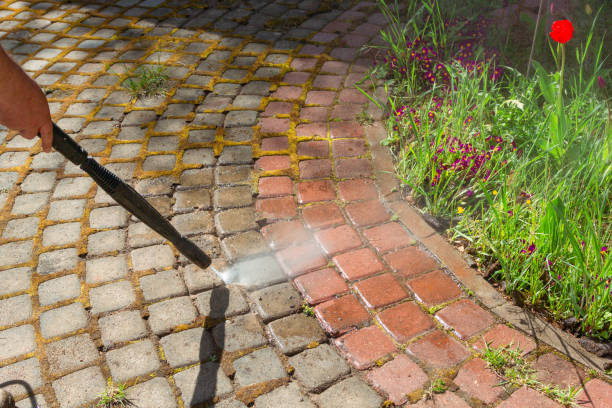
Brick pavers are one of the most popular hardscape choices for driveways, walkways, patios, and pool decks across Fort Worth and Saginaw area homes, valued for their aesthetic appeal, durability, and the warm, textured character they bring to outdoor spaces. But brick pavers have specific cleaning characteristics that differ meaningfully from poured concrete, and applying the same power washing approach appropriate for standard concrete to a paver surface can cause real, lasting damage to the joints and surface stability that make pavers function correctly.
Why Brick Pavers Require a Different Cleaning Approach Than Poured Concrete
The Joint Sand Is the Critical Vulnerability
What makes brick paver cleaning genuinely different from cleaning poured concrete is the joint sand that fills the gaps between individual paver units. This sand, whether standard polymeric sand or traditional jointing sand, holds the paver system together, prevents individual units from shifting, and supports the structural integrity of the entire installation. Excessive water pressure directed into paver joints dislodges and washes away this joint sand, destabilizing the paver system in ways that are immediately invisible but progressively worsen as pavers begin to shift, sink, and separate.
Individual Units Can Be Dislodged by Excessive Pressure
Unlike a monolithic concrete slab that moves as a single piece, individual brick paver units can be physically dislodged from their bedding layer by concentrated high-pressure water directed at their edges or surfaces at close range. A paver unit that's been shifted even slightly from its original position creates an uneven surface that accumulates water, accelerates further instability, and presents a trip hazard in a walkway or driveway context.
Paver Surface Coatings and Sealants Are Pressure-Sensitive
Many installed paver systems have been sealed with protective sealants that enhance color, reduce staining, and protect the surface from weather and traffic wear. High-pressure washing can strip these sealant coatings, requiring costly reapplication and leaving the unprotected paver surface exposed to the staining and weathering the sealant was applied to prevent.
How Brick Pavers Accumulate Grime in Fort Worth
Organic Growth in Joints First, Then Spreading to Surfaces
Algae, moss, and weed growth in brick paver installations typically establishes first in the joint spaces between pavers, where sand provides a growth medium and the narrow, sheltered joint geometry maintains moisture. From the joints, biological growth spreads across paver surfaces, particularly in shaded areas that retain moisture longer after rain.
Efflorescence Is Extremely Common on Pavers
Brick pavers are among the most efflorescence-prone surfaces in residential hardscaping, since their porous composition and the moisture they consistently encounter from below through the sand and bedding layers create ongoing conditions for mineral migration to the surface. White chalky deposits on paver surfaces are one of the most common complaints among Fort Worth paver owners and require specific mineral-dissolving treatment to address effectively.
Rust Staining From Metal Furniture and Fixtures
Metal patio furniture, fire pit rings, planter feet, and other metal items placed on paver surfaces leave rust staining when moisture causes the metal to oxidize and leach iron compounds into the paver surface. These rust patterns require oxidation-specific treatment that standard pressure washing alone doesn't address.
The Professional Approach to Brick Paver Cleaning
Conservative Pressure to Protect Joint Sand
Professional power washing of brick pavers uses pressure settings deliberately more conservative than what would be used on poured concrete, specifically to clean paver surfaces effectively without the joint sand erosion that excessive pressure causes. This calibrated approach is one of the most important distinctions between professional paver cleaning and DIY attempts that use whatever pressure setting seems to produce good visual results without understanding the joint damage occurring below the visible surface.
Appropriate Nozzle Distance and Angle
Maintaining appropriate distance between the pressure nozzle and the paver surface, and using spray angles that clean paver surfaces without directing concentrated pressure into joint spaces, protects joint integrity while still achieving thorough surface cleaning. This technique detail is easy to overlook in DIY pressure washing but has significant consequences for paver system stability over repeated cleaning cycles.
Pre-Treatment for Biological Growth and Efflorescence
Pre-treatment with solutions specifically formulated for brick paver biological growth and efflorescence addresses these common issues more effectively than pressure alone, breaking down organic matter and mineral deposits before washing rather than relying on mechanical force to dislodge material that chemical treatment handles more effectively and gently.
Re-Sanding After Professional Cleaning
For paver installations where joint sand has been depleted over time through previous cleaning, weather erosion, or normal settling, professional cleaning creates an ideal window to re-sand joints before sealing. Re-sanding restores the structural integrity of the joint system, and sealing immediately after cleaning protects both the freshly cleaned surface and the new joint sand from rapid re-contamination.
Signs Your Brick Pavers Need Professional Cleaning
Visible green or black biological growth spreading across paver surfaces. This indicates established algae or moss that has progressed beyond the joint spaces onto the paver surface itself.
White chalky deposits appearing on paver faces. Classic efflorescence indicating active mineral migration that requires targeted treatment beyond standard cleaning.
Pavers feeling slick underfoot when wet. Biological growth creating slip hazard on a surface designed for regular foot traffic use.
Uneven surface with shifting or sunken units. While this is a structural repair issue rather than a cleaning issue, cleaning before repair and sealing after restoration is the complete maintenance sequence for a paver system showing these signs.

Restore Your Paver Investment the Right Way
Brick pavers represent a meaningful investment in your property's hardscape, and cleaning them correctly protects that investment rather than gradually undermining it through joint damage from improper pressure. Professional power washing calibrated specifically for paver systems delivers a thorough clean that restores your pavers' appearance without compromising the structural integrity that keeps them looking great for years.
Request your power washing quote here.
Detail You Can See. Quality You Can Trust.
Contact Us


Find us on


