blog
.avif)
Power Washing Your Outdoor Kitchen and Grill Area the Right Way
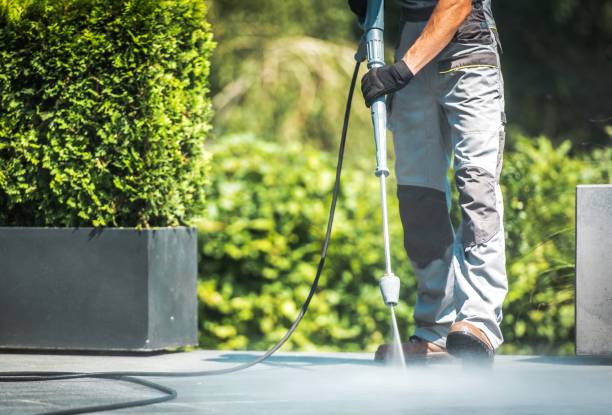
Outdoor kitchens and dedicated grill areas have become increasingly popular additions to Fort Worth and Saginaw backyards, and they bring with them a specific set of cleaning challenges that differ meaningfully from standard patio or driveway power washing. The combination of grease, food residue, heat exposure, specialty surface materials, and integrated appliances creates a cleaning scenario where the right approach matters more than almost any other exterior surface.
Why Outdoor Kitchens and Grill Areas Get Especially Dirty
Grease and Food Residue Are More Stubborn Than Standard Grime
Standard exterior surfaces accumulate atmospheric dirt, mold, and pollen. Outdoor kitchen surfaces deal with all of that plus grease splatter, food debris, smoke residue, and cooking byproducts that bond to surfaces differently than standard grime. Grease in particular penetrates porous surface materials and becomes more difficult to remove the longer it sits, especially when it's been repeatedly heat-cured by nearby cooking activity.
Smoke and Heat Exposure Stains Surfaces Over Time
Surfaces near active grills and smokers develop smoke staining that discolors stone, concrete, and tile over time, creating a yellowed or darkened appearance in the areas most directly exposed to cooking exhaust that differs from standard dirt accumulation and requires specific treatment to fully address.
Constant Food and Beverage Activity Adds Layer Upon Layer
Between the grease splatter of actual cooking and the food spills, beverage drops, and general mess of active outdoor entertaining, outdoor kitchen surfaces accumulate a layered buildup of different types of residue that compound on each other in ways that a standard single-substance stain doesn't.
Surface Materials in Outdoor Kitchens That Require Specific Consideration
Natural Stone Countertops and Surrounds
Natural stone surfaces like granite, travertine, slate, and similar materials are commonly used in outdoor kitchen construction and require particularly careful approach during cleaning. These materials are sensitive to acidic cleaning agents that can etch the surface, and excessive pressure can damage both the stone surface itself and any sealant coating applied during installation.
Stucco and Stone Veneer on Outdoor Kitchen Structures
The exterior structure of many built-in outdoor kitchens uses stucco or stone veneer that carries the same sensitivity to pressure and moisture infiltration as these materials on home exteriors, requiring the same conservative pressure approach discussed in the stucco and brick cleaning guides.
Tile Surfaces and Grout Lines
Tile used in outdoor kitchen backsplash areas and countertop surrounds accumulates grease and grime in the grout lines specifically, since grout is far more porous than the tile surface itself and absorbs cooking residue deeply. Appropriate cleaning solutions combined with appropriate pressure are more effective than pressure alone for grout restoration.
Concrete Countertops
Poured concrete outdoor kitchen countertops are porous surfaces that benefit from the same pre-treatment and sealant approach as concrete driveways, with the added consideration that food-safe cleaning products are appropriate for surfaces that contact food preparation areas.
What Must Be Protected During Outdoor Kitchen Cleaning
Integrated Appliances
Built-in grills, refrigerators, side burners, and other integrated appliances must be carefully protected during any power washing activity near the outdoor kitchen structure. Water forced into appliance vents, control panels, or burner assemblies can cause damage that's both costly to repair and potentially creates safety issues with gas appliances specifically.
Electrical Outlets and Lighting
Many outdoor kitchens include weatherproof electrical outlets, switches, and lighting fixtures that require careful protection during water-intensive cleaning. Even weatherproof-rated fixtures have limits on direct water exposure, particularly under the pressure levels involved in power washing.
Cabinet Doors and Hardware
Outdoor cabinetry, whether stainless steel, polymer, or teak, has its own specific cleaning considerations that generally don't include direct high-pressure water application, since water forced into cabinet gaps and around hinges can cause interior damage, rust, and seal failure.
The Right Cleaning Approach for Grill Surrounding Areas
Pre-Cleaning Grease Treatment Is Essential
The grease and food residue specific to cooking areas requires a degreasing pre-treatment step before pressure washing, similar to the approach used for oil stains on concrete driveways. Without this step, pressure washing alone redistributes grease across the surface rather than removing it, spreading the problem rather than solving it.
Lower Pressure Near Appliances and Specialty Surfaces
Working at reduced pressure near integrated appliances and specialty stone or tile surfaces protects these elements while still effectively cleaning surrounding concrete or paver areas where higher pressure is appropriate.
How Often Should Outdoor Kitchen Areas Be Professionally Cleaned
For actively used outdoor kitchens in the Fort Worth and Saginaw area, professional cleaning once or twice a year during active use seasons keeps grease and cooking residue from becoming too deeply embedded, with many homeowners choosing to schedule a cleaning at the start of outdoor entertaining season in spring and again at the end of the season in fall.

Keep Your Outdoor Kitchen Ready for Entertaining
An outdoor kitchen is one of the most significant backyard investments a homeowner can make, and keeping it clean and well-maintained protects both the investment itself and the experience it's designed to deliver. Professional cleaning with the right approach for each specific surface and material type ensures your outdoor kitchen area looks its best without the risk of damage from inappropriate technique.
Request your power washing quote here.

Detail You Can See. Quality You Can Trust.
Contact Us


Find us on


