blog
.avif)
How to Remove Hard Water Stains From Windows in Texas
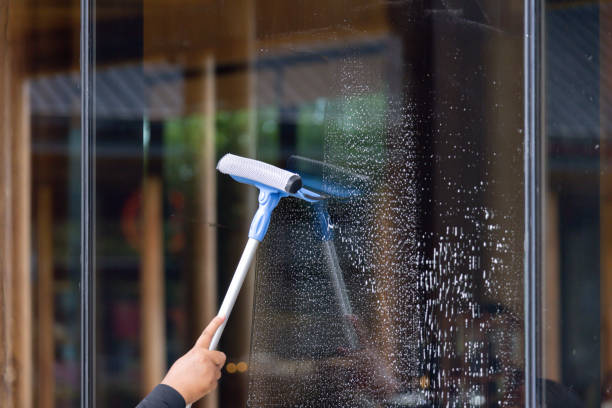
If you've ever looked at your windows and noticed cloudy, chalky spots that won't wipe away no matter how much glass cleaner you use, you're dealing with hard water stains — one of the most stubborn and misunderstood window problems Texas homeowners deal with. Unlike regular dirt or dust, these spots don't respond to a quick wipe-down, which leaves a lot of people wondering what's actually going on and how to fix it.
What Causes Hard Water Stains on Windows
Hard water stains form when water containing high mineral content, primarily calcium and magnesium, evaporates and leaves those minerals behind on the glass surface. Texas water is generally considered "hard," meaning it carries a higher mineral concentration than water in many other parts of the country, which makes this issue particularly common for homeowners here.
Sprinkler Overspray Is a Major Culprit
If your sprinkler system regularly hits your windows, even just a light mist during each watering cycle, you're constantly depositing a fresh layer of mineral-rich water onto the glass. Over weeks and months, this builds into a noticeable, stubborn film.
Rain Followed by Sun Exposure
Rainwater itself isn't usually the issue, but when rain dries quickly under direct sunlight rather than being wiped away, it leaves mineral deposits behind in the same way sprinkler overspray does, just less frequently.
Window Placement and Sun Exposure
Windows that face direct afternoon sun tend to develop hard water stains faster, since the heat speeds up evaporation and leaves mineral deposits behind more quickly than on shaded windows where moisture has more time to drip away before drying.
Why Hard Water Stains Are So Difficult to Remove
Unlike surface dirt, hard water stains are essentially mineral deposits bonded to the glass. Standard glass cleaners are designed to break down dirt, oil, and grime, not mineral buildup, which is exactly why so many homeowners find that their usual cleaning products don't make a dent in these stains.
The longer hard water stains sit on a window, the more they can etch into the glass surface itself, especially if the window has been repeatedly exposed without treatment over a long period of time. In more severe cases, this etching becomes a permanent texture change rather than a removable surface stain.
DIY Methods for Hard Water Stains (and Their Limits)
Vinegar Solutions
A common DIY approach involves a vinegar and water solution, since the acidity helps break down mineral deposits. This can work for lighter, more recent staining, but it often requires repeated applications and doesn't fully resolve heavier, long-term buildup.
Specialized Hard Water Stain Removers
Some products are specifically formulated to dissolve mineral deposits rather than just clean dirt and grime. These tend to be more effective than standard glass cleaner but still may require multiple applications and significant scrubbing effort for stubborn spots.
Why Scrubbing Too Hard Can Backfire
A natural instinct when a stain won't come off is to scrub harder, but with hard water stains on glass, aggressive scrubbing with the wrong materials can create micro-scratches in the glass surface, which can actually make future cleaning more difficult since dirt and minerals settle into those scratches more easily.
Why Professional Cleaning Gets Better Results
Professional window cleaners have access to specialized tools and treatments specifically designed to dissolve mineral buildup without damaging the glass surface, something that's difficult to replicate with consumer products alone.
Specialized Mineral-Dissolving Treatments
Professional-grade treatments are formulated specifically to break down calcium and mineral deposits more effectively than standard glass cleaners or basic DIY solutions, often resolving staining that's resisted multiple DIY attempts.
Proper Technique Prevents Etching
Knowing how much pressure to apply, what tools to use, and how long to let a treatment sit before removal all play a role in fully dissolving hard water stains without risking scratches or further damage to the glass.
Addressing the Root Cause
A professional can also help identify whether sprinkler placement or other recurring exposure is causing the staining in the first place, since removing the existing stains is only part of the solution if the same conditions will just cause them to return.
Preventing Future Hard Water Stains
Adjust sprinkler heads away from window-facing direction. If your sprinklers are regularly spraying your windows, redirecting them is one of the most effective ways to prevent new staining from forming.
Dry windows after heavy rain when possible. While not always practical for every window, wiping down easily accessible windows after a rainstorm can prevent mineral deposits from setting in.
Schedule regular window cleaning. Catching mineral buildup early, before it has months or years to bond to the glass, makes removal significantly easier and helps avoid the more severe etching that comes with long-term neglect.
When to Call a Professional
If you've tried vinegar solutions or store-bought hard water removers without success, or if the staining has been building for a year or more, it's likely time to bring in a professional. At that point, DIY methods are unlikely to fully resolve the issue, and continued scrubbing attempts risk causing more harm than good to the glass itself.

Get Your Windows Back to Crystal Clear
Hard water stains are frustrating, but they're not a permanent fixture on your windows if addressed properly. Professional treatment can dissolve stubborn mineral buildup safely, restoring clarity to your glass without the risk of scratching that comes with aggressive DIY scrubbing.
Request your window cleaning quote here.

Detail You Can See. Quality You Can Trust.
Contact Us


Find us on


