blog
.avif)
How to Read Your Solar Monitoring Data to Know When to Clean
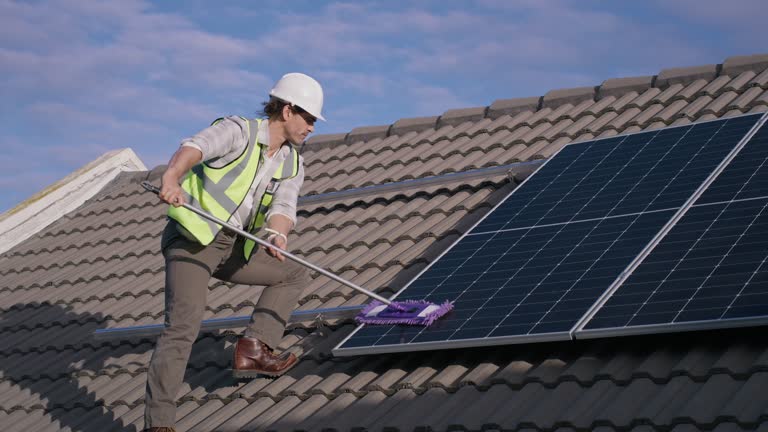
One of the most valuable tools solar panel owners have for making informed cleaning decisions is their solar monitoring system, yet most homeowners either don't use it, don't know how to interpret what it's telling them, or don't connect the data patterns they see to maintenance decisions that could improve their system's performance. Here's a practical guide to reading your monitoring data in a way that makes cleaning timing a data-informed decision rather than a calendar-based guess.
Understanding What Your Monitoring System Measures
Energy Production vs. Energy Consumption
Solar monitoring systems typically display both what your panels are producing and what your home is consuming, and understanding the difference between these two metrics is the starting point for using your data for cleaning decisions. For cleaning purposes, production data is what matters: how many kilowatt-hours your panels are generating per day or per hour under given sunlight conditions.
Irradiance and Weather-Adjusted Data
Some monitoring systems display irradiance data alongside production, which measures the intensity of sunlight reaching your panels. This weather context is critically important for interpreting production data meaningfully, since lower production on a cloudy day is expected and normal rather than a signal of panel contamination. The meaningful signal for cleaning decisions comes from production that's lower than expected given the actual sunlight conditions, not production that's lower than expected given perfect conditions on a cloudy day.
The Baseline: What Your System Should Produce
Establishing Seasonal Production Baselines
If your system has been operating for at least a full year, your monitoring history contains the most accurate baseline for what your specific system should produce in each season given your local conditions. Comparing current production against the same calendar period in previous years, rather than against a theoretical maximum, accounts for all the location-specific factors that affect your actual system performance.
Post-Cleaning Production as the Clean-Panel Baseline
The period immediately following a professional cleaning provides the clearest picture of what your panels produce when fully clean under current conditions. Noting your daily production in the days immediately after a cleaning establishes a clean-panel baseline that makes subsequent efficiency decline visible as production gradually moves away from that post-cleaning peak.
Recognizing the Cleaning Signal in Your Data
Gradual Decline From a Clean-Panel Peak
The most common production pattern associated with accumulating panel contamination is a gradual, persistent decline from a post-cleaning baseline over weeks and months, even as weather conditions remain similar. This gradual decline doesn't correlate with changes in weather or season but tracks instead with the time elapsed since cleaning, mirroring the gradual accumulation of contamination on panel surfaces.
Sudden Production Drop After a Specific Event
A sudden, noticeable production drop following a specific weather event, a spring pollen peak, a dust storm, a period of bird activity on the roof, or a hail event, represents a different signal than gradual accumulation decline. These event-correlated drops suggest that a specific contamination event has meaningfully affected output and warrants prompt cleaning rather than waiting for a scheduled service date.
Comparing Current Performance to Historical Same-Period Data
If your current June production is notably lower than last June's production under similar weather conditions, and you cleaned more recently last year than this year, the difference likely reflects contamination-related efficiency loss that cleaning would address. This historical comparison is particularly useful for homeowners who haven't established a recent post-cleaning baseline to compare against.
Using Panel-Level Data for More Precise Assessment
Identifying Individual Underperforming Panels
Systems with panel-level monitoring can reveal which specific panels are underperforming relative to others in the array, which often indicates concentrated contamination on those specific panels from bird activity, shading from debris, or other localized factors that uniform cleaning will address. This granularity helps focus cleaning attention on the panels with the highest efficiency recovery potential.
String-Level Performance Patterns
For systems without individual panel monitoring but with string-level data, comparing performance between strings can reveal whether contamination is affecting certain sections of the array more severely than others, informing both cleaning priorities and potential adjustments to panel placement or surrounding vegetation management.
Setting a Production Threshold for Cleaning Decisions
Defining Your Personal Threshold
Rather than simply scheduling cleaning at fixed calendar intervals, some solar homeowners establish a personal production threshold: a percentage decline from clean-panel baseline that, when reached, triggers a cleaning appointment regardless of where it falls on the calendar. This threshold-based approach ensures cleaning happens when the efficiency recovery value justifies it rather than either too frequently or not frequently enough based on calendar timing alone.
The Financial Threshold Calculation
Your production threshold can be expressed financially by calculating the value of the daily production difference between your clean-panel baseline and your current production, comparing it against the amortized daily cost of a cleaning visit. When the daily efficiency loss value reaches or exceeds the cleaning cost allocated per day, the ROI threshold for scheduling cleaning has been met.

Your Monitoring System Is Your Maintenance Guide
The production data your solar monitoring system generates every day contains the most accurate, property-specific signal available for making cleaning decisions. Learning to read that data in the way described above transforms your monitoring system from a passive production recorder into an active maintenance guide that tells you exactly when your panels need attention rather than requiring you to guess based on time elapsed or visual inspection alone.
Schedule your solar panel cleaning quote here.

Detail You Can See. Quality You Can Trust.
Contact Us


Find us on


