blog
.avif)
How to Preserve Your Boat Dock After Professional Cleaning
Getting your boat dock professionally cleaned delivers an immediately noticeable result, but without a few thoughtful follow-up steps, algae and grime can return faster than you might expect given the dock's constant water exposure. Here's how to extend the results of your cleaning and protect your dock's surface over the long term.
Why Docks Need More Post-Cleaning Attention Than Other Surfaces
Unlike a driveway or siding that dries out completely between weather events, a dock exists in near-permanent contact with moisture, which means the conditions for algae regrowth are essentially always present. This doesn't make cleaning pointless, far from it, but it does mean that a few protective steps after cleaning make a meaningful difference in how long results last before significant regrowth returns.
Sealing Wood Dock Surfaces After Cleaning
If your dock has wood decking, applying a quality sealant after professional cleaning is one of the most effective steps you can take to extend both the cleanliness and the structural longevity of the surface.
Why Timing Matters for Sealing
Sealant should be applied after the dock surface has been thoroughly cleaned and allowed to dry completely, never onto a damp or freshly wet surface. Applying sealant while moisture is still present traps that moisture beneath the coating, which can actually accelerate decay rather than preventing it.
What a Good Sealant Does
A quality wood dock sealant creates a barrier that reduces how readily the surface absorbs moisture, which in turn reduces the consistent dampness that allows algae to establish itself and grow. It also helps protect the wood from UV damage and the general weathering that degrades wood surfaces in direct sun and water exposure.
Staining vs. Sealing: Understanding the Options
Sealants Alone
A clear sealant protects the wood from moisture absorption without significantly changing its appearance, maintaining a more natural wood look while still providing meaningful protection.
Stain-Sealant Combinations
Products that combine staining and sealing in a single application offer the same moisture protection while also restoring or refreshing the dock's color, which can be particularly appealing for older wood that's become gray or faded from years of sun exposure.
Composite Dock Surfaces: Different Needs Than Wood
Composite decking materials are generally more resistant to moisture absorption than wood, but they're not entirely immune to algae growth. For composite surfaces, cleaning is still essential, but sealing is less critical than with wood since the material's density and non-porous nature already provides more inherent resistance to moisture-related issues.
Composite-Specific Treatments
Some manufacturers offer treatments specifically formulated for composite decking materials that help resist algae and mildew regrowth, which can be worth exploring for composite dock owners wanting to extend the time between necessary cleanings.
Regular Rinsing Between Professional Cleanings
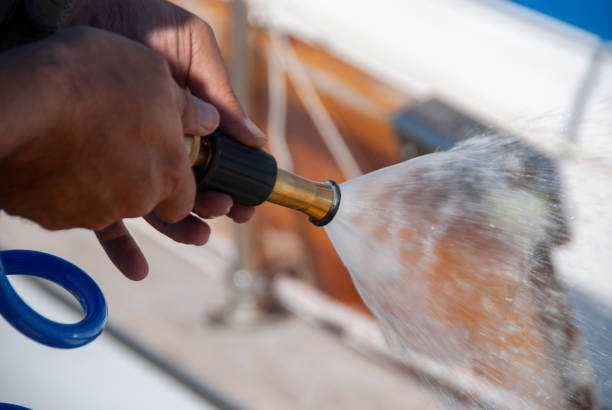
While it won't replace professional cleaning for addressing established algae growth, a periodic rinse of your dock surface between professional cleanings can help slow the rate of buildup by removing fresh organic matter before it has time to establish itself as a more tenacious growth layer.
Addressing Shade and Moisture Sources Where Possible
Since shade and persistent moisture are the two most direct contributors to algae growth on dock surfaces, reducing either, where practically possible, can meaningfully extend the time between necessary cleanings.
Tree Trimming Near the Dock
If overhanging branches are creating consistent shade directly over your dock surface, trimming these back can increase sun exposure and help the surface dry out faster after rain, making conditions less hospitable for rapid algae regrowth.
Inspecting Hardware Regularly
While not directly related to algae prevention, using the period right after a professional cleaning, when the dock surface is clear and all components are more visible, as an opportunity to inspect hardware, check for soft spots in wood, and identify any areas showing early signs of wear, makes good use of the post-cleaning window when your dock is in its most accessible, cleanly visible state.
Establishing a Maintenance Schedule That Works for Your Dock
Post-cleaning preservation is most effective as part of a broader, consistent maintenance approach rather than a one-time effort. Establishing a regular cleaning schedule, combined with sealing wood surfaces as needed and periodic inspection of the overall structure, keeps your dock in better long-term condition than any single-step approach alone.

Make Your Professional Cleaning Last Longer
The steps you take after a professional dock cleaning directly influence how long the results last and how well your dock's surface holds up over time. Sealing wood surfaces, rinsing periodically between cleanings, and addressing shade and moisture sources where possible all contribute to extending both the cleanliness and the long-term lifespan of your dock.
Request your boat dock cleaning quote here.

Detail You Can See. Quality You Can Trust.
Contact Us


Find us on


