blog
.avif)
How to Clean Concrete and Poured Boat Docks in Texas
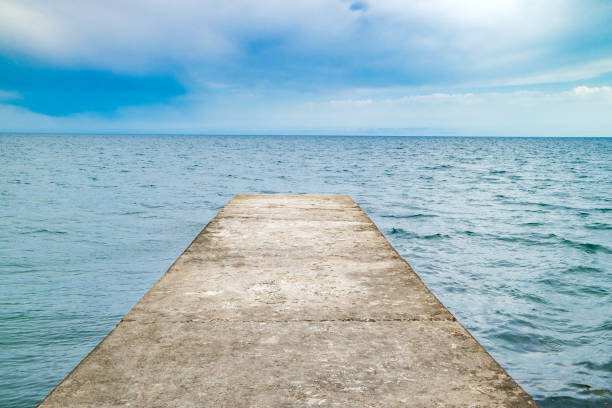
Concrete and poured dock structures represent some of the most durable and permanently installed waterfront access solutions available to Texas lake property owners. Their mass and structural permanence make them among the longest-lasting dock configurations, but this durability doesn't exempt them from the algae growth, biological accumulation, and surface staining that affect every dock material in Texas's waterfront environment. Understanding how concrete dock cleaning differs from wood and composite dock maintenance helps owners of these substantial structures approach cleaning with the right expectations and technique.
Why Concrete Docks Are Both More Durable and More Challenging to Clean
Concrete Is More Porous Than It Appears
Like concrete driveways and other poured concrete surfaces, concrete dock structures are more porous than their hard, solid appearance suggests. This porosity allows algae, biological matter, and mineral deposits to penetrate into the surface layer rather than just sitting on top, which means effective cleaning needs to address embedded growth and deposits rather than just surface-level removal.
The Constant Water Environment Accelerates Surface Penetration
The same porosity that allows grime to penetrate into a driveway surface works more aggressively on a concrete dock surface because the constant water exposure of a waterfront environment keeps the concrete surface in a perpetually damp state that maximizes the rate of biological growth penetration. Unlike a driveway that dries completely between weather events, a concrete dock rarely fully dries at the water interface zones.
Greater Mass Means More Total Surface Area to Address
Concrete dock structures tend to be more substantial and permanent than floating or frame-built wood dock systems, often with thicker structural elements, seawalls, boat ramps, and integrated structures that all contribute to the total surface area requiring cleaning attention beyond just the walking surface itself.
Specific Cleaning Challenges for Concrete Docks
Algae Deeply Embedded in Concrete Pores
Algae on concrete dock surfaces penetrates more deeply into the material's pore structure than on smoother, less porous materials, which is why simple rinsing or surface-level pressure washing often removes visible algae while leaving embedded growth that regenerates quickly from the material's interior. Effective concrete dock cleaning requires pre-treatment that addresses this embedded growth rather than just the surface layer.
Biological Staining From Waterline Zone
The waterline zone on concrete dock structures develops its own distinctive biological staining pattern from the combination of wave action, biological activity at the air-water interface, and the mineral deposits that form as water repeatedly wets and dries this transitional zone. This staining often appears as dark horizontal banding along the dock's water contact surfaces and requires specific treatment to address effectively.
Efflorescence on Concrete Dock Surfaces
As with other concrete surfaces, concrete docks are susceptible to efflorescence from moisture driving mineral migration to the surface. On a concrete dock surface that's in constant contact with water, efflorescence conditions are persistently present, meaning white mineral deposits are a recurring maintenance consideration that appropriate treatment can address but that will return over time as part of the material's ongoing moisture exposure.
Embedded Rust Staining From Metal Components
Concrete dock structures typically incorporate significant metal reinforcement, hardware, and structural components. Rust from these metal elements can leach through the concrete surface over time, creating rust staining patterns that require specific oxidation treatment rather than standard pressure washing to address effectively.
The Right Cleaning Approach for Concrete Docks
High Pressure Is More Appropriate for Concrete Than Other Dock Materials
Concrete's hardness and density makes it the dock material most tolerant of higher-pressure washing, and thorough cleaning of deeply embedded algae in concrete pores genuinely benefits from more aggressive pressure than is appropriate for wood or aluminum dock surfaces. This greater pressure tolerance is one area where concrete dock cleaning differs significantly from other dock material cleaning.
Pre-Treatment Is Still Essential Despite Pressure Tolerance
Even with concrete's greater pressure tolerance, pre-treatment with appropriate cleaning solutions that break down embedded biological growth and address specific staining types remains essential for achieving thorough results. Relying on pressure alone without chemical pre-treatment typically produces surface-level cleaning that leaves embedded growth to regenerate rapidly.
Sealing After Cleaning Provides Meaningful Protection for Concrete Docks
The same sealing rationale that applies to concrete driveways applies equally to concrete dock surfaces. Applying an appropriate concrete sealant after professional cleaning creates a barrier that reduces future moisture penetration, slows biological growth reestablishment, and makes future cleaning more effective by preventing new growth from penetrating as deeply into the treated surface.
Maintenance Frequency for Concrete Dock Structures
Given concrete's greater porosity and the aggressive biological growth conditions of the waterfront environment, concrete dock structures generally benefit from annual professional cleaning to prevent deeply embedded growth from becoming progressively more difficult to fully address with each subsequent cleaning cycle. The long-term cost of allowing embedded growth to deepen over multiple years without adequate cleaning is generally greater than the cost of consistent annual maintenance.

Protect Your Permanent Dock Investment
A concrete dock structure represents among the most permanent and substantial waterfront investments a Texas lake property owner can make, and consistent professional cleaning that accounts for concrete's specific characteristics protects both the structure's appearance and its long-term integrity. Professional cleaning with appropriate pre-treatment, calibrated pressure, and post-cleaning sealing delivers the most complete and longest-lasting results for these durable but demanding dock structures.
Request your boat dock cleaning quote here.

Detail You Can See. Quality You Can Trust.
Contact Us


Find us on


