blog
.avif)
How Solar Panel Angle and Orientation Affects Dirt Accumulation
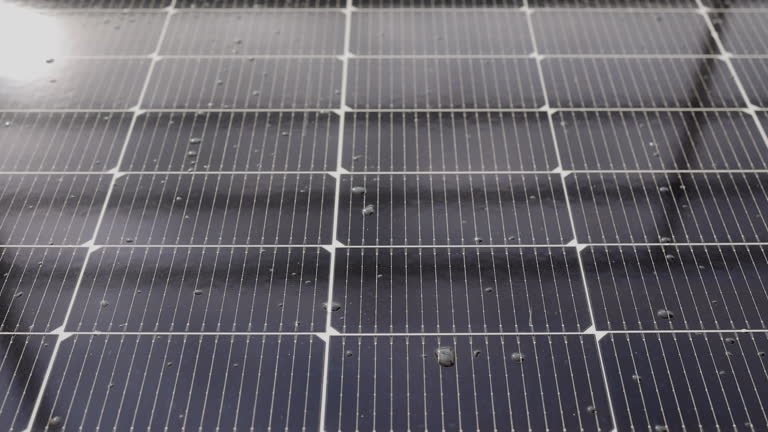
Solar panel installation involves careful calculation of panel angle and orientation to maximize sunlight capture throughout the day and across seasons, but these same positioning decisions also affect how your panels accumulate dirt, how quickly different types of contamination build up, and how effectively rain naturally rinses surface debris between professional cleanings. Understanding this relationship between panel positioning and accumulation patterns helps you think more precisely about your system's maintenance needs.
How Panel Angle Affects Accumulation and Natural Rinsing
Steeper Angles Allow More Natural Debris Removal
Panels mounted at steeper angles benefit more from gravity-assisted debris removal than shallow-angle installations. When rain falls on a steeply mounted panel, water runs off more quickly and with more velocity, carrying loose dust and light debris with it as it drains from the panel surface. This more effective natural rinsing means steeply mounted panels generally accumulate loose atmospheric dust somewhat more slowly than equivalent panels mounted at shallower angles, since each rain event provides more thorough surface rinsing.
Shallow Angles Allow Water and Debris to Pool
Panels mounted at shallower angles, including the flat roof installations covered in an earlier guide, don't benefit from this gravity-assisted rinsing to the same degree. Water drains more slowly from shallow-angle panels, allowing more time for mineral deposits to form as water sits before evaporating, and light debris that might wash off a steep panel instead settles and begins adhering on a shallow surface.
The Lower Edge Accumulation Pattern
Regardless of angle, the lower edge of any angled panel accumulates a concentration of debris that gravity draws downward during dry conditions and water carries to the drainage point during wet conditions. This lower edge accumulation pattern is a consistent characteristic of angled panel installations and a specific focus area during professional cleaning.
How Panel Orientation Affects What Type of Dirt Accumulates
South-Facing Panels and Direct Sun Exposure
South-facing panels in the northern hemisphere receive the most direct sunlight throughout the day, which is optimal for energy production but also means these panels experience the most intense heat cycling. This repeated heating and cooling cycle can bake certain types of contamination, particularly sticky pollen residue and bird droppings, onto the panel surface more firmly than the same materials would adhere on panels with less direct sun exposure.
North-Facing Aspects and Shade Effects
North-facing roof sections and panels installed on north-facing slopes receive less direct sun and more consistent shade than south-facing installations. While this reduced sun exposure means less heat-baking of deposits, it also means less evaporative drying between moisture events, which creates conditions more favorable for biological growth and mold development on the panel surface, particularly in humid Texas conditions.
East and West-Facing Panels and Morning or Evening Dew
East-facing panels are the first to catch morning dew as temperatures warm after dawn, and west-facing panels retain evening moisture as temperatures drop after sunset. These dew cycles create repeated moisture-then-evaporation events that contribute to mineral deposit accumulation on these specifically oriented panels in ways that differ from the accumulation patterns on south-facing panels receiving more consistent full-day sun exposure.
How Wind Direction Interacts With Panel Orientation
Prevailing Wind and Dust Source Direction
The relationship between your property's location relative to prevailing wind direction and the orientation of your panels affects which panels receive the most direct wind-carried dust and debris deposition. Panels facing into the prevailing wind direction receive more direct impact from airborne particles than panels oriented away from the wind, creating orientation-specific accumulation rate differences that can be observed in production monitoring data over time.
Highway and Road Proximity Compounds Orientation Effects
For properties near major roads, the combination of wind direction and panel orientation determines which panels are most directly in the path of traffic-generated airborne particles, creating potentially significant accumulation rate differences between panels on different sides of the same installation depending on their specific orientation relative to the traffic source.
What This Means for Your Cleaning Schedule
Monitoring Identifies Orientation-Specific Accumulation Patterns
Homeowners with panel-level production monitoring can observe whether certain panels in their array show faster efficiency decline than others, which may reflect orientation-specific accumulation patterns rather than uniform system-wide buildup. This data can inform more targeted cleaning attention to panels with the highest accumulation rates rather than treating the entire array as uniformly accumulating at the same rate.
Discussing Orientation Context With Your Cleaning Provider
Sharing information about your panel array's orientation, your property's relationship to prevailing winds, and any nearby traffic or pollution sources with your cleaning provider allows for a service approach that accounts for these orientation-specific factors rather than applying a uniform cleaning approach that doesn't reflect the actual accumulation patterns your specific installation experiences.

Maximize Performance Across Your Entire Array
Panel angle and orientation create real, predictable differences in how contamination accumulates across different sections of your solar installation, and understanding these patterns allows for more informed, precise maintenance decisions that keep every panel in your array performing at its potential throughout the year.
Schedule your solar panel cleaning quote here.

Detail You Can See. Quality You Can Trust.
Contact Us


Find us on


