blog
.avif)
How Birds and Pests Nesting Near Solar Panels Affect Performance
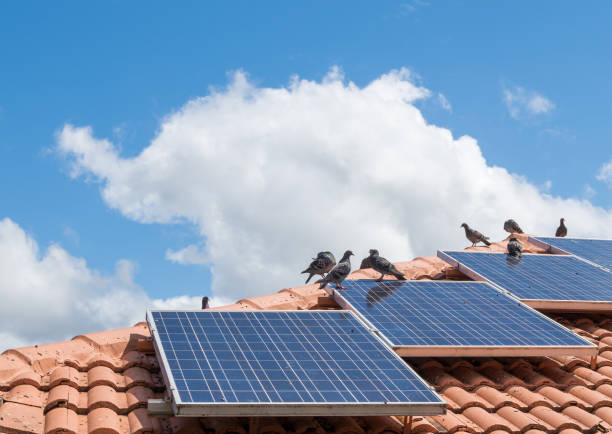
Bird nesting under and around solar panels is a more common and more impactful problem than many Texas solar homeowners realize until they're dealing with it directly. The gap between roof-mounted solar panels and the roof surface creates an enclosed, sheltered space that birds, particularly pigeons and starlings in the Fort Worth area, find extremely attractive for nesting. Once established, bird activity around solar panels affects system performance through multiple pathways that go well beyond the simple dropping accumulation covered in other cleaning guides.
Why Solar Panels Create Ideal Bird Nesting Conditions
The Gap Between Panel and Roof Is Perfect Shelter
Standard roof-mounted solar panel racking systems create a gap of several inches between the panel surface and the roof below, providing an enclosed, weather-protected space that's elevated off the ground, sheltered from rain and direct sun, and largely undisturbed by human activity. From a bird's perspective, this is among the most desirable nesting real estate available on a residential property.
Once One Bird Finds It, Others Follow
Birds communicate nest site availability through their behavior, and a successfully established nest under solar panels tends to attract additional nesting activity in subsequent seasons, potentially growing from a single bird problem into a colony situation over time if not addressed.
How Bird Activity Affects Solar Panel Performance
Droppings Directly Reduce Panel Efficiency
As covered in earlier guides, bird droppings create concentrated opaque spots on panel surfaces that block sunlight from reaching the cells underneath, with disproportionate efficiency impact relative to their physical size depending on panel wiring configuration. When nesting birds are present immediately adjacent to or under the panels, dropping accumulation on panel surfaces happens continuously and can be significantly more rapid and concentrated than incidental bird activity would produce.
Nesting Material Can Block Panel Ventilation
Solar panels generate heat during operation, and the gap between panel and roof serves a ventilation function that helps manage panel operating temperature. Nesting material accumulating in this gap can restrict airflow, potentially contributing to elevated panel operating temperatures that marginally reduce efficiency through the temperature coefficient effect.
Wiring Damage Is a Serious Risk
This is the most significant and potentially costly impact of persistent bird and pest activity near solar panels. Birds, squirrels, and rodents that establish themselves in the space under solar panels may chew or damage the wiring that connects panels within the array and connects the array to the inverter. Damaged wiring can cause panel failures, system shutdowns, and in serious cases creates fire risk that represents the most severe possible consequence of neglected pest activity near solar installations.
Signs of Bird or Pest Activity Around Your Solar Panels
Visible Droppings on Panel Surfaces in Concentrated Patterns
Unlike scattered, occasional bird droppings from flyover activity, nesting birds produce dropping accumulation in concentrated patterns on panels directly above nesting areas, often building up more rapidly and severely than general atmospheric accumulation.
Nesting Material Visible at Panel Edges
Straw, leaves, feathers, and other nesting material visible at the edges of panels or in the gap between panel frames and roof surface is a clear sign of active or recently active nesting, even if no birds are currently visible.
Unusual Sounds From Roof Area
Persistent scratching, cooing, or other animal sounds coming from the roof area during daylight hours can indicate active bird or pest activity under or around solar panels before visual signs become obvious from the ground.
Unexplained Production Drops
A sudden or gradual production decline that doesn't align with weather conditions or seasonal patterns may indicate wiring damage or significant panel coverage from nesting-associated dropping accumulation that warrants investigation.
Addressing Bird and Pest Activity Near Solar Panels
Professional Bird Deterrent Systems
The most effective long-term solution for persistent bird nesting under solar panels is professional installation of deterrent systems designed specifically for this application. These typically include wire mesh or critter guard systems that close off the gap between panel frames and roof surface, preventing access to the nesting space while maintaining necessary ventilation clearance for the panel system.
Timing Deterrent Installation Appropriately
Installing deterrent systems during active nesting season requires care to avoid trapping nesting birds or active nests, which may have legal implications depending on the bird species involved. Addressing deterrent installation outside of active nesting season, or working with a provider experienced in humane pest management, is the appropriate approach.
Cleaning in Conjunction With Deterrent Installation
Professional cleaning to address existing dropping accumulation and any nesting debris on panel surfaces is most effectively combined with deterrent installation in a single service visit, since installing deterrents without cleaning first leaves existing accumulation in place beneath a now-closed gap.

Protecting Your System From Ongoing Pest Risk
Bird and pest activity near solar panels is not a problem that resolves on its own, and the wiring damage risk specifically means that addressing persistent nesting activity promptly is important rather than treating it as a low-priority issue to deal with eventually. A combination of professional cleaning to address existing accumulation and appropriate deterrent installation to prevent recurrence protects both your system's performance and the structural integrity of its wiring for the long term.
Schedule your solar panel cleaning quote here.

Detail You Can See. Quality You Can Trust.
Contact Us


Find us on


